---
title: "10.2 Basic Process Concepts"
chapter: "10 Process"
source: "OMG BPMN 2.0.2 — formal/2013-12-09"
pages: "147-148"
---
> 10 Process · páginas 147-148 · [índice](../README.md)
## 10.2 Basic Process Concepts
### 10.2.1 Types of BPMN Processes
**Business Process** modeling is used to communicate a wide variety of information to a wide variety of audiences. **BPMN** is designed to cover many types of modeling and allows the creation of end-to-end **Business Processes**. There are three basic types of **BPMN Processes**:
1. Private Non-executable (internal) Business Processes
2. Private Executable (internal) Business Processes
3. Public Processes
#### 10.2.1.1 Private (Internal) Business Processes
*Private* **Business Processes** are those internal to a specific organization. These **Processes** have been generally called workflow or BPM **Processes** (see Figure 10.4 ). Another synonym typically used in the Web services area is the *Orchestration* of services. There are two types of *private* **Processes**: *executable* and *non-executable*. An *executable* **Process** is a **Process** that has been modeled for the purpose of being executed according to the semantics defined in Clause 14. Of course, during the development cycle of the **Process**, there will be stages where the **Process** does not have enough detail to be “executable.” A non-executable **Process** is a *private* **Process** that has been modeled for the purpose of documenting **Process** behavior at a modeler-defined level of detail. Thus, information needed for execution, such as formal condition Expressions are typically not included in a *non-executable* **Process**. If a swimlanes-like notation is used (e.g., a **Collaboration**, see below), then a *private* **Business Process** will be contained within a single **Pool**. The **Process** flow is therefore contained within the **Pool** and cannot cross the boundaries of the **Pool**. The flow of **Messages** can cross the **Pool** boundary to show the interactions that exist between separate *private* **Business Processes**.

*Figure 10.4 – Example of a private Business Process* (p. 148)
#### 10.2.1.2 Public Processes
A *public* **Process** represents the interactions between a *private* **Business Process** and another **Process** or *Participant* (see Figure 10.5). Only those **Activities** that are used to communicate to the other *Participant(s)*, plus the order of these **Activities**, are included in the *public* **Process**. All other “internal” **Activities** of the *private* **Business Process** are not shown in the *public* **Process**. Thus, the *public* **Process** shows to the outside world the **Messages**, and the order of these **Messages**, that are needed to interact with that **Business Process**. *Public* **Processes** can be modeled separately or within a **Collaboration** to show the flow of **Messages** between the *public* **Process Activities** and other *Participants*. Note that the *public* type of **Process** was named “abstract” in **BPMN 1.2**.
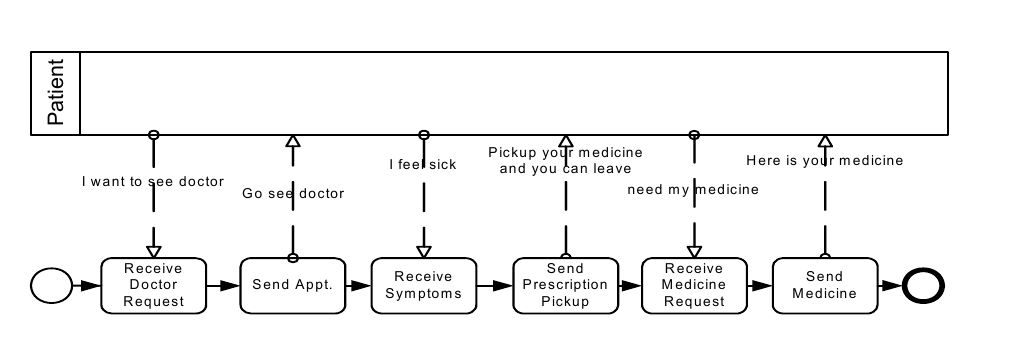
*Figure 10.5 – Example of a public Process* (p. 148)
### 10.2.2 Use of BPMN Common Elements
Some **BPMN** elements are common to both **Process** and **Choreography**, as well as **Collaboration**; they are used in these diagrams. The next few sub clauses will describe the use of **Messages**, **Message Flows**, *Participants*, **Sequence Flows**, Artifacts, *Correlations*, Expressions, and *Services* in **Choreography**. The key graphical elements of **Gateways** and **Events** are also common to both **Choreography** and **Process**. Since their usage has a large impact, they are described in major sub clauses of this clause (see page 232 for **Events** and page 286 for **Gateways**).